


Cyrqelonex
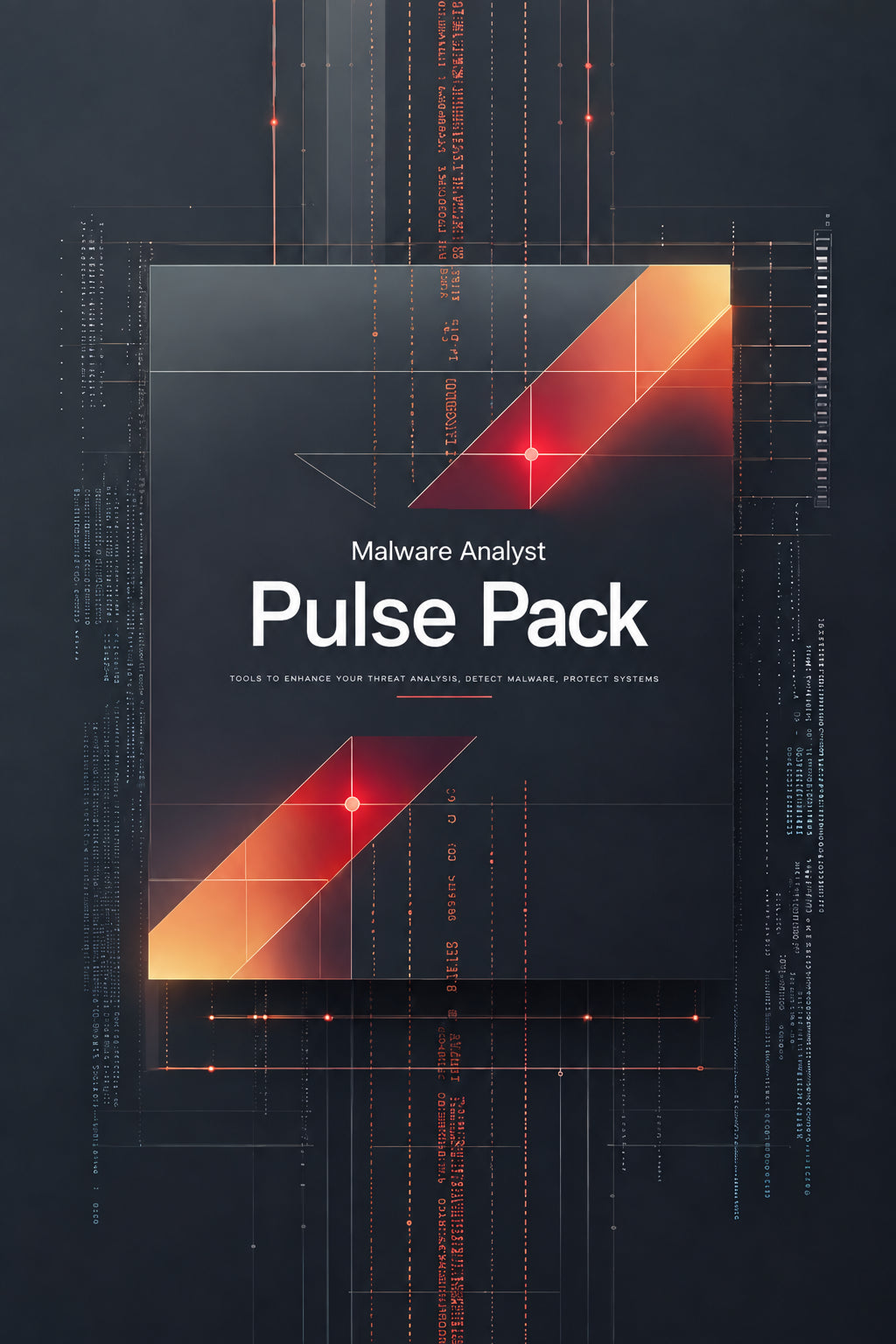
Pulse Pack
Pulse Pack
Couldn't load pickup availability
- ⬇️ Digital file available after purchase
- 🗂️ Long-term availability
- 🔒 Secure checkout
- 🗓️ Content updated in 2026
Self-paced learning overview
Solution
The Pulse Pack introduces a more structured analytical workflow.
Learners explore how suspicious behavior can be examined through several categories, how findings can be recorded consistently, and how analytical notes can be organized into a useful investigation record.
The course also introduces the idea of analytical context: one observation on its own may be unclear, while several related observations can provide a more informative picture.
The material is designed to help learners improve their ability to examine, compare, and describe suspicious activity in a clear and methodical way.
What’s Inside
The Pulse Pack includes structured lessons on malware behavior patterns, suspicious file characteristics, indicators, investigation notes, evidence grouping, observation categories, and analytical documentation.
Learners work through guided scenarios that demonstrate how different observations can be connected during an investigation.
The course also covers common analytical questions, methods for organizing findings, and ways to distinguish between direct evidence and interpretation.
Reference materials are included to help learners review important terminology and analytical concepts while working through the course.
Who Is This For?
The Pulse Pack is intended for:
- Learners who have completed introductory malware analysis material
- Security students looking for a more structured analytical approach
- Learners who want to improve investigation documentation
- People interested in understanding malware behavior patterns
- Learners who want to connect individual observations into a broader analysis
Basic familiarity with malware analysis terminology is helpful but not required.
What You’ll Learn
- Recognize common categories of suspicious behavior
- Organize investigation findings into clear groups
- Compare multiple indicators within an analytical context
- Identify relationships between file characteristics and observed behavior
- Create structured investigation notes
- Distinguish direct evidence from interpretation
- Describe suspicious activity using consistent terminology
- Understand how multiple observations support broader analytical reasoning
- Review investigation findings in a logical sequence
- Develop a more organized malware analysis workflow
Refund Policy
Eligible purchases of the Pulse Pack may be covered by a 30-day refund period, subject to the terms stated in the applicable refund policy.
The refund policy explains the conditions and request process for eligible purchases.
Share
How are Cyrqelonex courses structured?
How are Cyrqelonex courses structured?
Cyrqelonex courses are organized into clear sections that introduce malware analysis concepts step by step. Each tier includes structured materials focused on analytical thinking, investigation methods, malware behavior, and related security concepts. The amount and depth of material increase across the course tiers.
Do I need prior malware analysis knowledge?
Do I need prior malware analysis knowledge?
Not necessarily. The earlier tiers are suitable for learners who are beginning to explore malware analysis, while later tiers introduce broader analytical topics and more detailed study material. Learners can choose a tier that matches their current knowledge and study goals.
What type of materials are included?
What type of materials are included?
Depending on the tier, learners may receive structured lessons, reference materials, analytical examples, study notes, concept explanations, investigation frameworks, and guided activities. Each tier is designed around a defined learning scope rather than a fixed outcome.




Start a Conversation With Cyrqelonex
Have a question about our courses, materials, or learning structure? Send us a message and our team will be glad to assist.
- Choosing a selection results in a full page refresh.
- Opens in a new window.